World
US deportees tortured in Equatorial Guinea detention hotel, witnesses say
Witnesses claim two men expelled by the US were bound, hooded, and beaten in front of fellow detainees at a hotel in Equatorial Guinea.
18 Eylül 2026
PTI lawmakers arrived at the Sindh Assembly on donkey carts to protest rising fuel prices, turning Karachi's streets into a political spectacle.
When Pakistan Tehreek-e-Insaf (PTI) lawmakers rode donkey carts through Karachi's bustling traffic to reach the Sindh Assembly building on September 18, 2026, they converted the state's legislative center into a arena of economic protest. Clasping banners emblazoned with slogans such as "Petrol Bomb Namanzoor" (Petrol bomb unacceptable) and "Ghareeb Awam ki Jeeb par Daka Namanzoor" (Robbery of poor citizens' pockets unacceptable), the opposition legislators brought the stark realities of urban transport inflation directly to the governor's steps.
The spectacle unfolded during peak morning hours as opposition parliamentarians swapped luxury SUVs for traditional wooden carts drawn by working equines. Passersby along Court Road recorded the procession on mobile phones, as assembly security staff scrambled to navigate the unprecedented arrival. Inside the legislative precinct, lawmakers chanted against the relentless hikes in petroleum products, pointing out that fuel surcharges have systematically crippled working-class mobility in Karachi and across broader Sindh.
"When fuel prices touch unprecedented heights, lawmakers cannot comfortably drive petrol-powered vehicles into the house while our voters cannot afford a single liter of fuel for their motorbikes," remarked one protesting assembly member on the parliament steps. The direct action captured public attention, transforming routine parliamentary proceedings into a viral referendum on state taxation policy.
Behind the political theater lies a severe fiscal dynamic. Petroleum prices in Pakistan do not merely reflect international Brent crude fluctuations; federal levies, general sales taxes, and inland freight equalization margins account for a massive chunk of the final pump price. For low-income households, these fixed levies function as a regressive consumption tax that strikes hardest at commuting workers, small-scale logistics operators, and agricultural delivery networks.
In Karachi, a megacity devoid of a fully integrated mass transit infrastructure, millions rely on private two-wheelers or rickshaws. Each price increase triggers a cascading effect across the informal economy. Ride-hailing fares jump immediately, vegetable sellers increase prices to cover freight costs, and daily-wage laborers find a larger fraction of their income consumed by basic transport.
Riding draft animals into legislative precincts carries a distinct history in South Asian political dissent. Similar demonstrations occurred during previous fuel price spikes over the past two decades, utilized alternately by opposition factions demanding tax relief. Yet, the September 2026 demonstration hits during an exceptionally fragile economic stretch, where middle-class households face unprecedented utility rates alongside record food inflation.
While treasury benches within the Sindh Assembly dismissed the protest as a media stunt aimed at securing television headlines, the core grievance resonates deeply across the urban working class. Transport unions across Karachi have already threatened rolling strikes if diesel subsidies are not reinstated for public buses and intra-city freight operators.
The political maneuvering inside the Sindh Assembly exposes a widening rift between state revenue collection goals and citizens' purchasing power. As international oil markets remain volatile, federal and provincial authorities face a narrow path between meeting fiscal revenue targets and protecting citizens from structural impoverishment. Until structural energy reforms take root, symbolic protests on donkey carts remain a vivid indicator of a populace pushed to its financial limits.
PTI members of the Sindh Assembly rode donkey carts on September 18, 2026, as a symbolic protest against escalating petrol prices and government levies. They carried banners with slogans like 'Petrol Bomb Namانzoor' to demonstrate how high transport costs affect ordinary citizens.
Protesting legislators displayed prominent banners proclaiming 'Petrol Bomb Namanzoor' (Petrol bomb unacceptable) and 'Ghareeb Awam ki Jeeb par Daka Namanzoor' (Robbery of poor citizens' pockets unacceptable). These slogans targeted federal petroleum levies and provincial inflation impacts.
Because Karachi lacks a comprehensive public transit network, millions depend on private motorcycles, rickshaws, and minibuses. Rising petrol and diesel prices immediately trigger higher commuting fares and push up cargo delivery costs for essential goods.
GuruAlpha News Desk
The GuruAlpha News team delivers accurate, timely coverage of breaking news, markets, technology, and lifestyle — in English and Urdu.
Witnesses claim two men expelled by the US were bound, hooded, and beaten in front of fellow detainees at a hotel in Equatorial Guinea.
18 Eylül 2026
President Trump bans major media outlets from the White House, citing unfavorable coverage, sparking press freedom concerns.
18 Eylül 2026
A salmon boom in Alaska's Katmai National Park has led to the biggest Fat Bear Week ever, with 16 competitors vying for the title.
18 Eylül 2026
Lawsuits accuse the Trump administration of voter intimidation by suggesting federal officers could monitor polling sites.
18 Eylül 2026
The Bank of Japan raised its benchmark interest rate to 1.25% to curb persistent inflation driven by global conflicts and energy prices.
18 Eylül 2026
Los Angeles prosecutors charged a drug-impaired driver with murder after her SUV blew a red light and crushed a city bus, killing two.
18 Eylül 2026
Automattic, the company behind WordPress, has named Jeremy Klaperman as interim CFO following recent executive departures.
18 Eylül 2026
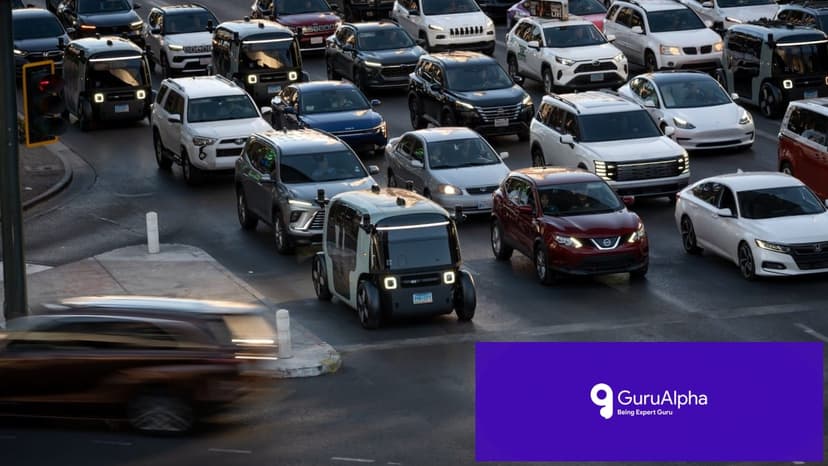
Amazon's Zoox is set to expand its robotaxi fleet beyond 100 vehicles in Nevada, marking a significant shift in autonomous transportation.
18 Eylül 2026